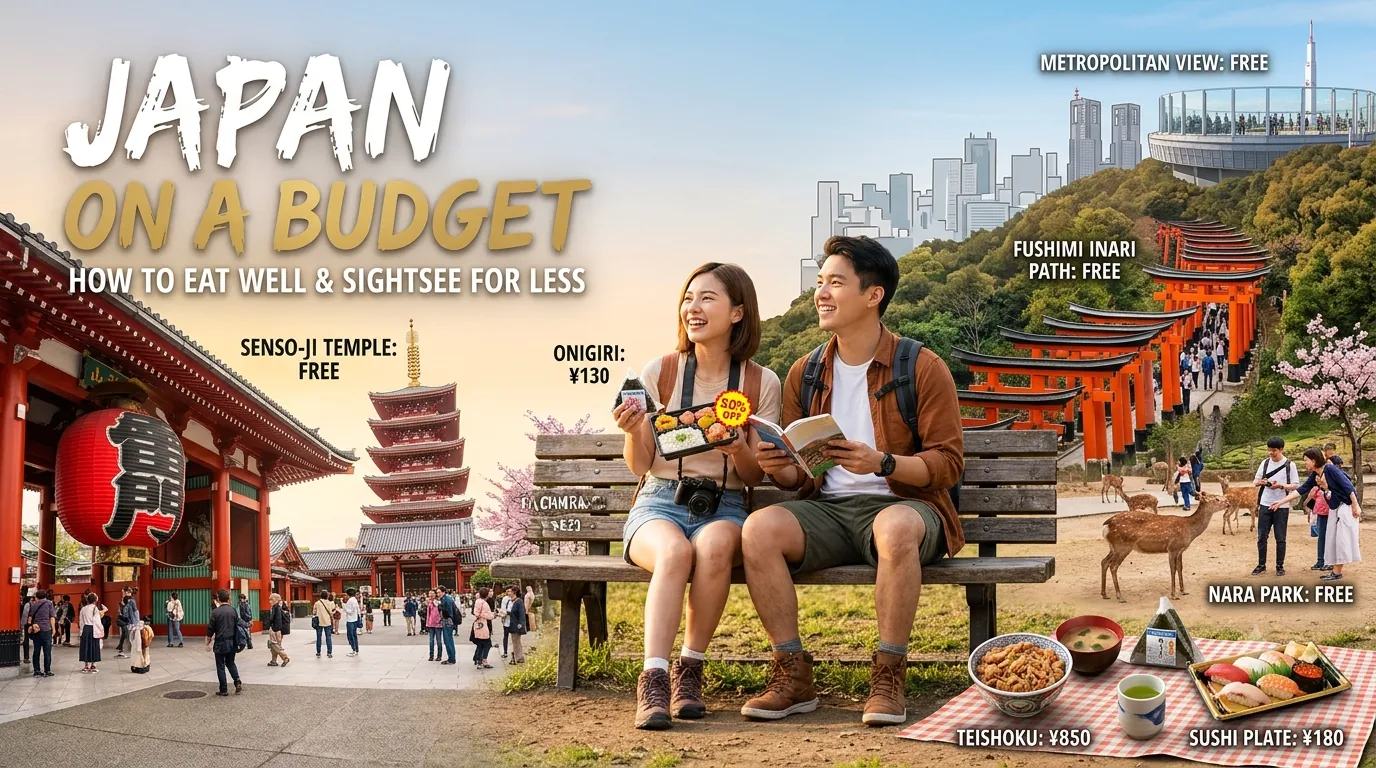
Cut your Japan trip costs without skimping on food or sights. Step-by-step tips on cheap flights, trains, and where to eat well for less.
# Japan on a Budget: How to Eat Well and See the Sights for Less
A bowl of standing-room soba in a Tokyo station underpass costs about 450 yen, roughly $3. Two seats over, a salaryman slurps his in four minutes flat. Down the street, the same lunch in a tourist-facing restaurant runs $18. Same noodles, same city, one decision apart.
That gap is the whole game. You can do Japan on a budget without eating badly or skipping the sights, but only if you stop treating the trip as one big booking and start treating it as a series of small, deliberate choices. Give this a weekend of planning before you book anything, and you will cut your daily spend by a third while eating better than most tourists do.
Here is the sequence that works, step by step, with the places it usually goes wrong.
## Step 1: Solve the flight first, because it sets your ceiling
Everything else in your budget bends around what you paid to get there. That makes **how to cheap flight to japan** the first problem to crack, not the last.
The baseline for a return fare in 2026, booked two to four months out:
| Route | Typical low fare | Where to watch |
|---|---|---|
| London to Tokyo | £520 to £700 | Google Flights, [Skyscanner](https://www.skyscanner.com/) |
| Frankfurt or Paris to Tokyo | €560 to €750 | Google Flights |
| New York or Chicago to Tokyo | $750 to $1,050 | Google Flights, Momondo |
| Dubai to Tokyo | AED 2,600 to 3,400 | Skyscanner |
| Mumbai or Delhi to Tokyo | INR 55,000 to 75,000 | Skyscanner |
| Bangkok or Singapore to Tokyo | $180 to $320 | AirAsia, Scoot, Zipair |
The single biggest lever is not the airline. It is the date. Shift your trip two weeks off cherry blossom season or Golden Week and the fare drops by a third. Fly into Osaka (KIX) instead of Tokyo (HND) and you often save another $80 to $150, with a cheaper onward train or a short budget flight.
**What goes wrong:** you find a "deal" that routes you through a third country with a 14-hour layover, or a low-cost carrier that charges for a checked bag, a seat, and water. Add those fees before you compare. If the total with bags lands within $60 of a full-service fare, take the full-service one.
## Step 2: Pick your base, not your itinerary
First-timers try to see Tokyo, Kyoto, Osaka, Hiroshima, and Sapporo in ten days. That is a train ticket with a holiday attached. [Slow travel](/blog/eu-s-single-train-ticket-what-it-means-for-your-2025-europe-trip) wins on cost too: every city change is a fare, a wasted morning, and a new set of convenience-store dinners.
Pick two bases for a two-week trip. Tokyo plus Kyoto is the classic. Tokyo plus Osaka is cheaper and gives you day trips to Nara and Kobe. Book accommodation directly with small guesthouses and machiya (townhouse) rentals rather than through the big platforms, and ask about weekly rates. A hostel dorm in Tokyo runs £25 to £35 a night; a private room in a Kyoto guesthouse, £55 to £75.
**What goes wrong:** you book a "cheap" hotel near a station that turns out to be 40 minutes from anything you want to see. Check the walk to the nearest useful train line, not just the nearest station.
## Step 3: Skip the rail pass and buy point to point
The Japan Rail Pass was once a no-brainer. It is not anymore. Prices rose sharply and the maths changed. For a Tokyo to Kyoto to Osaka trip, individual tickets cost less than a seven-day pass. A Tokyo to Kyoto shinkansen ticket runs about ¥14,000 (roughly £72 or $95). Buy it at the station or on the smartEX app.
For longer hops, the overnight bus is the budget traveller's secret. Tokyo to Osaka by bus is about ¥4,000 to ¥6,000, less than half the train, and you save a night's accommodation. Willer Express runs comfortable services with reclining seats.
**What goes wrong:** you buy a pass out of habit and then take three trains. Run the numbers on your actual route before you commit.
## Step 4: Eat like a local, three times a day
This is where [budget travel](/blog/best-day-to-fly-for-cheapest-airfare-google-flights-report-insights) in Japan stops feeling like a sacrifice. The cheap food is often the best food.
- **Standing soba and udon shops:** ¥400 to ¥700. Look for the ticket machines outside.
- **Conveyor-belt sushi at lunch:** ¥1,200 to ¥2,000, versus double at dinner.
- **Depachika (department store food halls):** half-price bento and prepared food after 7pm.
- **Konbini breakfast:** onigiri, tamago sando, and coffee for under ¥500.
- **Ramen counters:** ¥800 to ¥1,100 for a bowl that beats most restaurants back home.
Set a daily food budget of ¥3,500 (about £18, $23, or €21) and you will eat extraordinarily well. Spend your one splurge on a single memorable meal, not on three mediocre restaurant dinners.
**What goes wrong:** you default to the English-menu restaurant near your hotel. Walk two blocks off the main drag and the prices halve.
## Step 5: Do the free sights properly
Japan's best experiences are largely free or nearly so. Temple grounds, shrine forests, neighbourhood walks, and city parks cost nothing. The paid icons are still cheap by European or American standards: most temples charge ¥300 to ¥600, and a day pass for a city's sights rarely tops ¥1,500.
Book the one or two experiences that matter to you in advance (a sumo morning practice, a tea ceremony, a teamLab ticket) and let everything else be spontaneous.
**What goes wrong:** you buy a multi-attraction city pass you never fully use. Buy individual tickets unless you have mapped out four or more paid sights in one day.
## Our take
If we were booking this trip tomorrow for a reader in London or New York, we would fly Zipair or a full-service carrier into Osaka in late November, base ourselves in Tokyo and Kyoto, skip the rail pass entirely, and eat two meals a day from konbini, depachika, and standing counters. That combination lands a two-week trip near £1,400 or $1,800 excluding the flight, without a single day that feels like a compromise. Use Google Flights for the fare, Willer Express for any overnight leg, and your feet for everything else.
## FAQ
**Is Japan actually affordable in 2026?**
Yes, if you avoid peak season and eat the way locals do. Daily costs of £60 to £80 (about $75 to $100) are realistic outside Tokyo's priciest districts.
**Do I need the Japan Rail Pass?**
Usually not. For most two-city trips, point-to-point shinkansen tickets and the occasional bus cost less.
**When is the cheapest time to fly?**
Late November, early December, and February, avoiding cherry blossom season and Golden Week. Book two to four months ahead.
Frequently asked questions
Is Japan actually affordable in 2026?
Yes, if you avoid peak season and eat the way locals do. Daily costs of £60 to £80 (about $75 to $100) are realistic outside Tokyo's priciest districts.
Do I need the Japan Rail Pass?
Usually not. For most two-city trips, point-to-point shinkansen tickets and the occasional bus cost less.
When is the cheapest time to fly?
Late November, early December, and February, avoiding cherry blossom season and Golden Week. Book two to four months ahead.
 WokeTraveler